

Technical Features and Application Advantages of 30-Ton/Day Municipal Solid Waste (MSW) Incineration Equipment
1. Technical Features
Flexible Scalability
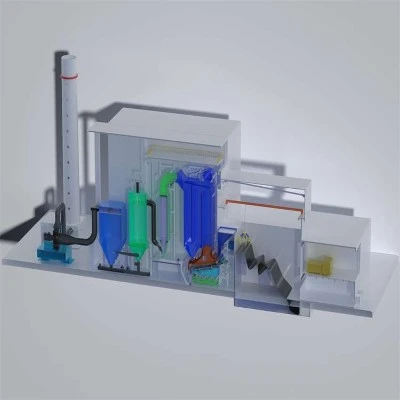
The 30-ton/day system adopts modular design, allowing adjustable processing capacity to suit decentralized waste management in towns, tourist areas, or remote regions. Compact footprint (typically 100–300 m²) enables containerized transport and rapid installation.
Optimized Environmental Performance
Utilizing low-temperature pyrolysis-gasification technology (300–800°C), it minimizes dioxin formation at the source. Combined with flue gas cleaning (desulfurization, denitrification, and dust removal), emissions can be as low as 0.02 ng TEQ/Nm³, exceeding EU standards. Residue volume is significantly reduced, with heavy metals immobilized in biochar for safe disposal.
High Energy Conversion Efficiency
Each ton of waste generates 200–300 m³ of syngas, producing 150–250 kWh of electricity (38% energy conversion rate). Waste heat can be repurposed for district heating or power generation, enhancing resource recovery.
2. Application Advantages
Cost-Effectiveness
Capital investment is 1/17th of large-scale incinerators (approx. RMB 2–12 million), with a construction period of just 45 days, drastically reducing transport and landfill costs.
Site Adaptability
Ideal for remote mountainous areas, industrial parks, or regions lacking centralized waste facilities, supporting electricity self-sufficiency and biochar for soil improvement.
Automated Operation
Equipped with smart control systems, enabling remote monitoring and 24/7 stable operation with minimal manual intervention.
3. Technical Selection Recommendations
Consider waste composition (e.g., moisture content), local environmental regulations, and economic viability when selecting incinerator types (e.g., with drying sections or pyrolysis-gasification reactors) and emission control technologies.